Landed Cost per Unit: A Worked Example into Felixstowe
Unit price is the number everyone negotiates and the least useful one. Here is the full arithmetic from factory gate to your warehouse, with the steps most buyers skip.
Two suppliers quote you. One says 0.42 a unit, the other says 0.38. The second is cheaper, obviously.
Not necessarily. The unit price is one line in a calculation with about eight lines in it, and the other seven are where importers get caught. This is that calculation, worked through with round numbers so you can substitute your own.
Everything below is illustrative. Freight rates move weekly, duty depends on classification, and your broker's fees are your broker's. The point is the method, not the figures.
Start with the carton, not the unit
Freight is charged on volume or weight, whichever produces the higher figure. So the first number you need is not the price — it is the carton.
Say the supplier quotes: 400 pieces per carton, carton dimensions 50 × 40 × 30 cm, gross weight 9 kg.
Volume per carton: 0.50 × 0.40 × 0.30 = 0.06 CBM.
A standard UK pallet takes, in this example, 24 such cartons stacked to a sensible height. That gives 9,600 pieces, 1.44 CBM and 216 kg gross.
If a supplier cannot give you these three numbers in the first reply, you cannot calculate anything and neither can they. That is itself information.
The arithmetic, line by line
Take the unit price at 0.40 and work forward. All figures illustrative, in the same currency for simplicity.
- Goods, ex works: 9,600 × 0.40 = 3,840
- Export handling and documentation at origin: 90
- Freight, road groupage Istanbul to UK: quoted per CBM; at 95 per CBM for 1.44 CBM = 137
- Insurance: 0.35% of goods value = 13
- Customs clearance and entry: 65
- Duty: depends on classification and origin evidence — see below
- Port and terminal handling: 55
- Inland delivery to your warehouse: 90
Excluding duty, that totals 4,290 for 9,600 pieces, or 0.447 per unit. The 0.40 you negotiated has become 0.447 — an increase of about twelve per cent, and the biggest single addition was not freight.
Where duty sits
Toys generally classify under heading 9503, and the applicable rate depends on the commodity code and the origin of the goods. The UK and Turkey have a bilateral free trade agreement, so preferential treatment may be available where origin is properly evidenced.
Two practical points. First, classification is the importer's responsibility, not the supplier's — a supplier may suggest a code, but you own the declaration. Second, preference is not automatic; it depends on the correct origin document travelling with the shipment. Ask your broker for the code and the rate before you commit, and ask the supplier whether they can issue the origin document.
Do not model duty at zero because someone told you Turkey is duty-free. Model it at the rate your broker gives you.
Now compare the two quotes properly
Return to the supplier quoting 0.38. Suppose their carton holds 300 pieces in the same box size — a lower pack density, because the item is bulkier or the packaging is less efficient.
Same pallet, same 24 cartons: now 7,200 pieces for the same 1.44 CBM. Goods cost 2,736. All the freight and handling lines stay identical, because you are shipping the same volume.
Total: 2,736 + 90 + 137 + 10 + 65 + 55 + 90 = 3,183 for 7,200 units = 0.442 per unit.
Almost exactly the same landed cost, from a headline price four pence lower. And you are now holding 2,400 fewer units for roughly the same logistics spend, which changes your cost per unit sold once you factor in a second shipment.
This is the whole argument for asking about carton data before price.
The lines buyers forget
Pallet exchange or disposal. Small, recurring, and never in the quote.
Storage between arrival and sale. If you are buying six months of stock, six months of pallet space has a cost. Ordering smaller and more often trades unit cost against storage cost, and for a small high-turnover item the trade often goes the other way from what people assume.
Capital tied up. Money in a warehouse is money not in the business. A container that sells over nine months and a road delivery that sells over six weeks are different financial products even at the same landed cost.
Packaging rework. If a retailer needs English-language artwork you did not specify at order stage, you are paying someone to relabel by hand.
What to ask for, in one message
Send this and you can build the model yourself:
- Unit price and the quantity break it applies at
- Pieces per carton, carton dimensions, gross and net weight
- Cartons per pallet and pallet height
- Lead time from order confirmation to collection
- Whether an origin document can be issued
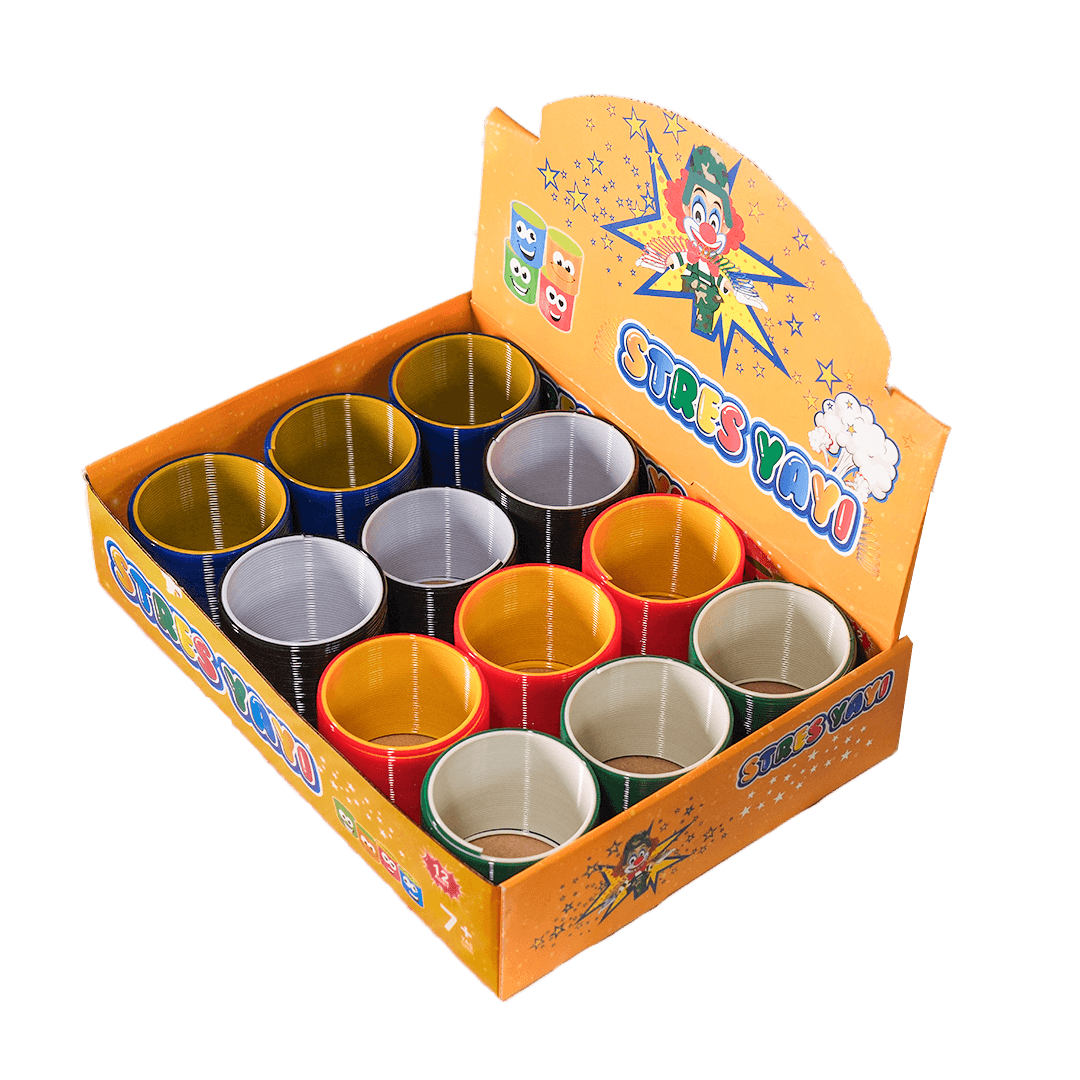
Our quotations carry those five as standard, because a quotation without them cannot be compared to anything. You can see the range on the products page — the stress spring and the team-colour spring pack differently, and for a full-pallet order that difference shows up in the freight line rather than the price line.
Message us on WhatsApp with the quantity you have in mind and the destination, and you will get the carton table back the same day.
All figures above are illustrative and used to show the method. Freight rates, duty rates and brokerage fees vary; use your own quotations and confirm classification with your customs broker.
Manufacturer Prices
See Our Products
Manufacturing in Istanbul since 1997. EN 71 certified, dispatch within 24 hours, FOB and CIF terms.
Team Colour Magic Spring
Two-tone stress spring in team colours, boxed. Wholesale from the manufacturer — EN 71 certified, produced in Istanbul.
View product →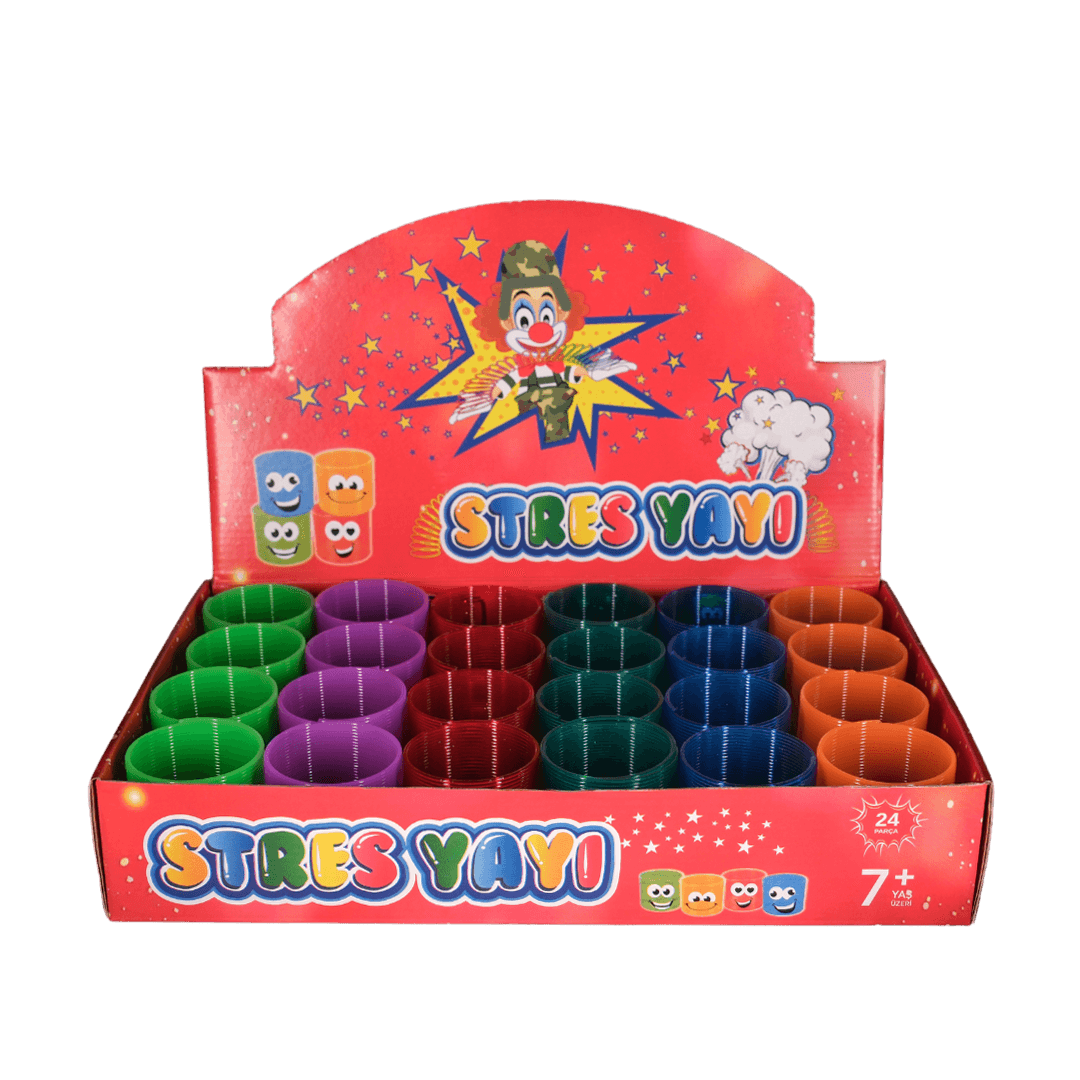
Wholesale Magic Spring
The classic magic spring — a rainbow coil that walks, stretches and springs back. Sold in bulk, mixed colours available on one pallet.
View product →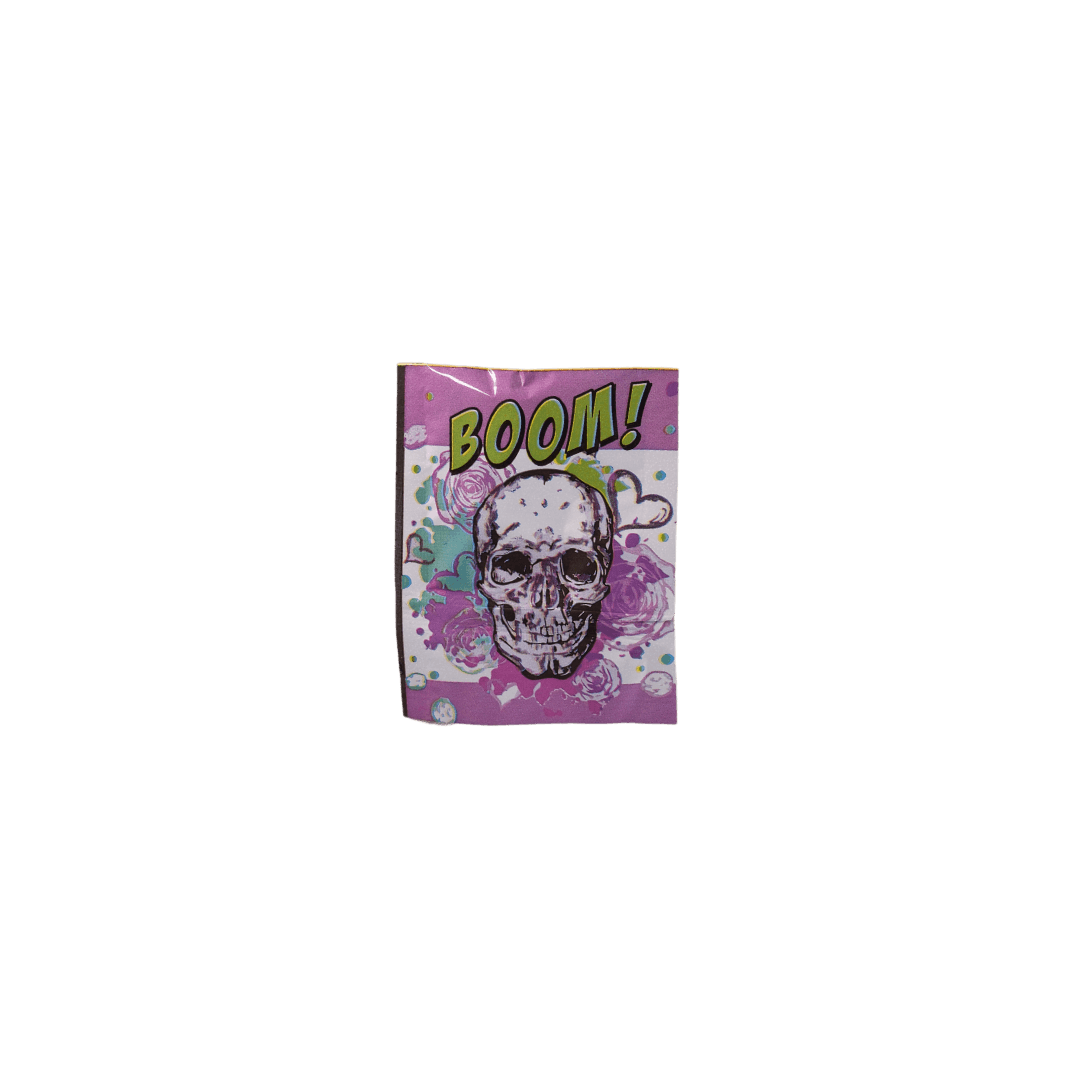
Wholesale Bang Bag
The classic shake-and-slam prank bag. No smell, no mess — just the bang. Wholesale from the factory.
View product →